
The Evolution of Consumerism and The Story of Stuff Mission
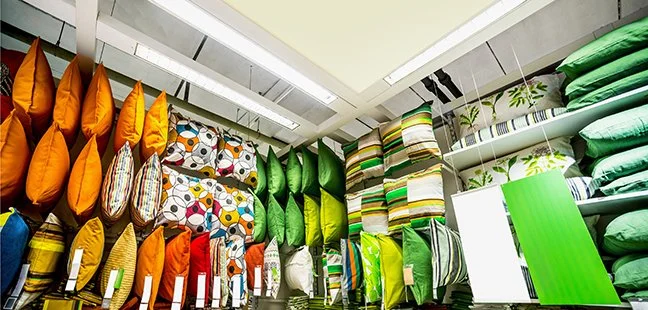
Have you ever looked around your home and thought “there’s too much stuff in here”? You’re not alone. Our mass accumulation of products—not home necessities like toilet paper and groceries, but rather phone upgrades, the latest fashion, trendy water bottles, and more—is by design, a result of our consumerist culture.
Consumerism is defined as the economical practice of acquiring goods beyond one’s basic needs. It is a rampant and environmentally devastating problem in the modern world, especially in the United States. This is famously highlighted in the 2007 documentary The Story of Stuff where creator and sustainability advocate Annie Leonard walks us through the damaging impacts of the material economy.
Below, we broadly unpack consumerism in America: when the practice took form, how it has evolved, and its connection to climate change. We’ll also review the mission of The Story of Stuff Project to challenge consumerism and educate people on more sustainable ways to buy (and not buy).
Consumerism Through the Years
Humans have always consumed—that is, we eat, wear clothes, and rely on shelter every day. But our role as consumers under capitalism took a new form in the early 20th century before World War I.
Early to Mid 20th Century
According to “A Brief History of Consumer Culture” by Kerryn Higgs, published by The MIT Press Reader, small businesses and corporations began to expand and scale production throughout the 1890s, only slowing down during wartime. After WWI, production exploded again, this time to an amount “12 times greater in 1920 than in 1890.”
The mass production of goods soon created anxiety among businessmen and economists over insufficient consumption rates; they could see people’s basic needs were more than met by the produced goods. Rather than slow production, leaders in business applied the practice of supply and demand, which public relations pioneer Edward Bernays outlines in Propaganda:
“Today supply must actively seek to create its corresponding demand … [and] cannot afford to wait until the public asks for its product; it must maintain constant touch, through advertising and propaganda … to assure itself the continuous demand which alone will make its costly plant profitable.”
Around this time in history, producers began to let go of the singular goal to meet people’s basic needs and instead create the demand needed to keep the machine of capitalism running.
Late 20th Century
After WWII, the cultural shift from wartime frugality to overconsuming and spending continued through the 1950s and beyond. Messaging from leaders pushed the idea that consumption—however unsustainable—benefits the consumer, producer, and the American economy as a whole.
An example of this can be found in 1959, when Vice President Nixon expressed positive consumerist sentiment during a debate with Premier Khrushchev; the subject of the debate was which country provided the best quality of life to its citizens.
In an NPR interview, American history professor and author Lizabeth Cohen explains that Nixon argued “that Americans have more goods to consume and more choice about what those goods actually are,” the message behind that being “the way to get out of any kind of crisis or decline is to encourage people to consume.”
Housing, automobiles, and household appliances were among the major products advertised, first by radio and then, primarily, by television. American journalist and critic of consumerism Vance Packard reported that marketers aimed to sell “luxuries of the upper classes” to lower class people, as well, pushing them as items that elevate one’s social status. “By striving to buy the product—say, wall-to-wall carpeting on instalment—the consumer is made to feel he is upgrading himself socially,” Packard wrote.
Early 21st Century
With every new decade, we develop more stuff to sell and consume.
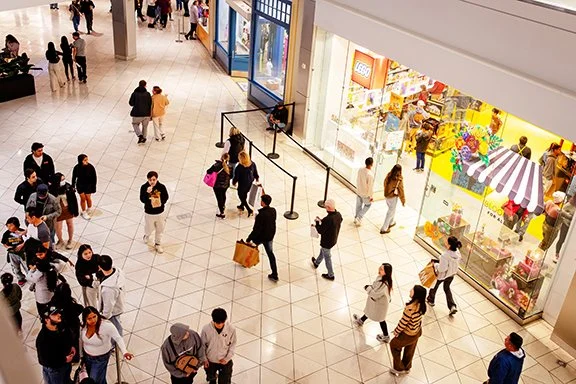
Today, the evolution of digital technologies, marketing strategies, and social media have shaped our consumption habits. Developments in e-commerce have made it possible to make a purchase anywhere, at any time. Personalized algorithms and relentless, targeted advertising have further persuaded digital users to convert to consumers, making it easier than ever to click “Buy Now” and “Add to Cart”.
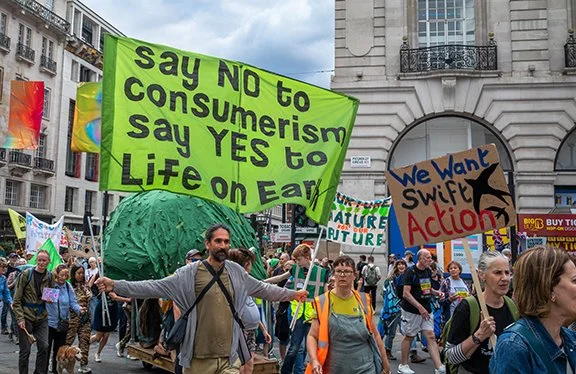
Environmental movements, including those supported by the Story of Stuff Project, have raised awareness about the detriments of mass consumerism. In addition, social media trends like “deinfluencing” have encouraged people to buy less and use their existing items more. Despite this progress, the U.S. has a long way to go in slowing down needless consumption and waste.

The Story of Stuff: 5 Stages of the Material Economy
The Story of Stuff Project began in 2007 with Annie Leonard's 20-minute documentary exploring how we make, use, and throw away consumer goods. What started as one widely discussed film grew into a nonprofit organization with a mission to make our production and consumption systems healthier and more sustainable.
Today, the Story of Stuff Project mobilizes a global community of over 1 million Changemakers, including parents, educators, students, scientists, and community leaders, according to its website. The organization has created award-winning animated movies, along with solutions-focused campaigns that provide engaging opportunities for people to get involved.
The Story of Stuff documentary lays out the five stages of the material economy, which we discuss below.
1. Extraction
In the material economy, extraction is the process of pulling ingredients and resources—think trees, water, rocks, and minerals—from the Earth in order to create products. Leonard describes this stage as “trashing the planet”, citing the result of our extraction through the years: 80% of original forests gone, one-third natural resources gone within three decades, and a loss of 2,000 trees a minute.
While some parties frame extraction of resources as a good thing, leading to the production of beneficial goods, people who live near extraction sites tend to not see any benefits. These regions often have higher levels of poverty and inequality, and the extraction process itself can create pollution that impacts the health of those who live nearby.
2. Production
The production stage is where the “stuff”-making takes place. From clothing to electronics, the creation of products often requires synthetic materials, toxic chemicals, and energy-intensive processes. This, in turn, results in products that have their own toxic qualities.
The production itself can be harmful to manufacturing workers; according to the film, there are one hundred thousand synthetic chemicals that are used across factories.
3. Distribution
The distribution stage follows capitalistic rules: Keep prices down, keep people buying, keep the inventory moving. Lean manufacturing and retail strategies prioritize profit over workers’ safety and environmental preservation. How? Through externalizing costs.
Leonard provides an example of a radio she bought that cost $4.99. As she was checking out, she wondered why and how the price could be so low, knowing the various materials were probably produced all over the world. The reason? People in the materials economy—impacted by extraction sites, working in factories and inhaling fumes—are paying with their health and livelihoods.
4. Consumption
Due to the omnipresence of advertising and consumerist culture, Americans tend to heavily identify with their purchases. According to the film, 99% of the products “we harvest, mine, process, transport” become garbage within just six months. Leonard also states that the average person consumes twice as much as someone did 50 years ago.
How did we get here? Government and business leaders used two strategies:
Planned obsolescence: Products are created to be used as quickly as possible to make room for more frequent purchases.
Perceived obsolescence: This strategy convinces us to throw away products even though they may still be useful. It involves convincing people to “demonstrate value” by purchasing more products that are “new” and “better.” Phone and technology upgrades are a great example of this.
Advertising also hides the destructive parts of the material economy, guiding audiences to focus exclusively on shopping and the benefits they’ll receive from their purchases.
5. Disposal
Every person in the U.S. creates an average of 4.5 lbs of garbage per day. The trash is either sent directly to a landfill or first burned in an incinerator then dumped. This is yet another stage of the process with severe environmental consequences, producing tons of dangerous water and air pollution in addition to the trash itself.
What You Can Do
“The good thing about an all-pervasive problem is that there are so many points of invention,” says Leonard at the conclusion of The Story of Stuff. Indeed, environmental advocates, consumerism critics, and more are working hard in various ways to mitigate the harmful effects of each stage of the materials economy.
If you are wondering how you can do your part, here are some suggestions.
Individual Level
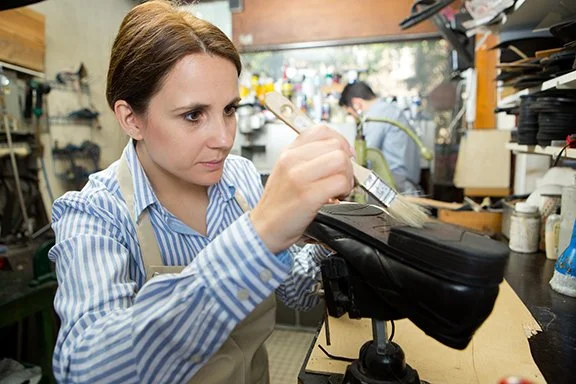
Consume more mindfully: Consider your relationship to shopping and what could be improved. When possible, choose to invest in durable, repairable goods over cheap, disposable products. You can also shop at thrift and consignment stores for clothes and other items.
Join the Right to Repair movement: The latest technology devices are easy to break and replace, not to mention advertisers’ push to upgrade the moment a new version is released. Story of Stuff advocates for stronger legislation around the right to repair consumer electronics and appliances.
Seek out sustainable companies: While this requires some research, it’s worth the certainty of knowing your dollars are going toward companies and causes that share your values. Good on You and Ethical Consumer are two sites that provide guidance on which companies operate under sustainable practices.
Community Level
Support your local economy: Many small, local businesses prioritize high-quality, sustainable materials and minimal packaging and waste compared to large corporations.
Organize community events: From clothing swaps to skill-sharing workshops, community events help people not only consume less but also support one another and strengthen their community.
Educate your neighbors. Have anti-consumerism goals? Plan on attending a local event? Tell your friends! Educating one another on the impacts of consumerism—from deforestation and extraction to throwing away perfectly good products—helps us understand the systems that drive overconsumption. Only then can we work together to make change.
*Earth Matters is not speaking on behalf of Story of Stuff. All content and research is our own.